US Signal

eBook  ·  2026

10 Key Considerations
for Choosing a
Colocation Provider

Designed for Control. Built to Scale.

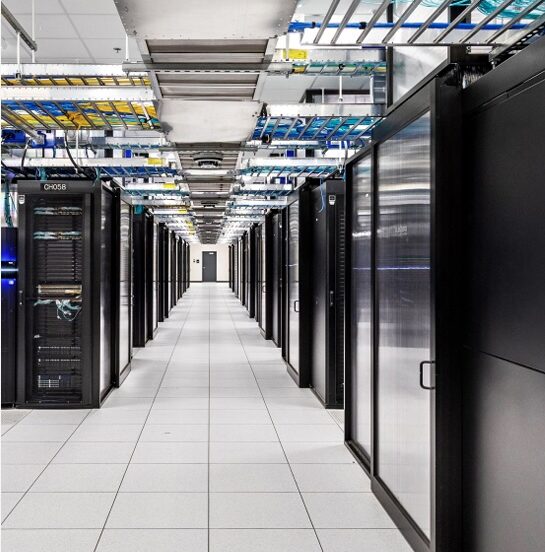
US Signal Grand Rapids data center


Section 01

Infrastructure is Now a Strategic Decision

Where infrastructure lives has never mattered more. Rising hardware costs, increasing power density, and the rapid expansion of hybrid cloud strategies are forcing IT leaders to rethink long-standing assumptions about where workloads should run.

Colocation has become a central part of that conversation — not simply as an alternative to on-premises environments, but as a foundation for performance, scalability, and long-term control.

Choosing the right colocation provider is no longer a facilities decision. It’s a strategic one.

At US Signal, colocation is designed as part of a more integrated model — where data centers, fiber connectivity, and hands-on operational support work together to create a more flexible and resilient environment.

$200B+

The global colocation market is projected to grow from roughly $84–$105 billion in 2025 to more than $200 billion by 2030, driven by cloud expansion, AI workloads, and rising infrastructure demands.

Markets and Markets

To help guide your decision, here are 10 key considerations every IT leader should evaluate when selecting a colocation provider.

$300K+
Average cost of a single hour of downtime for mid-size and large enterprises
ITIC 2024 Hourly Cost of Downtime Survey
80%+
Of enterprises now operate in hybrid or multi-cloud environments
Flexera, 2025
2–5×
More power per rack required by AI workloads vs. traditional environments
McKinsey, 2024

Section 02

The 10 Considerations

Every colocation decision involves trade-offs. The providers that stand apart are those that can answer confidently across all 10 of these dimensions — not just the ones that appear on a standard RFP.

Select any consideration to expand the full detail and key stats.

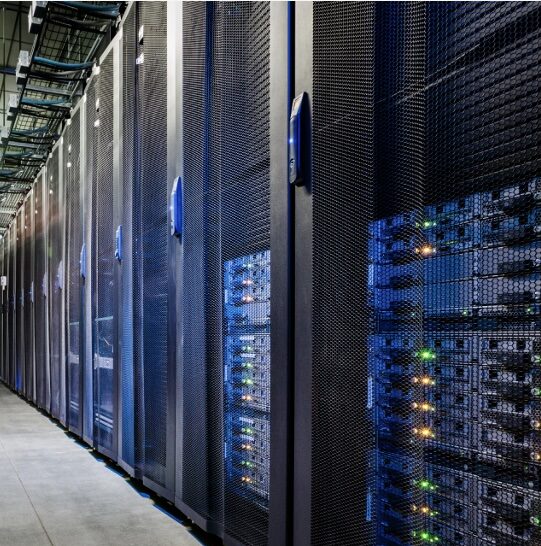
US Signal data center interior

Every effective colocation strategy begins with clarity around the use case. Whether the goal is to extend an existing data center footprint, support hybrid cloud, or establish a disaster recovery site, those objectives shape everything from power requirements to connectivity needs.

What’s changed is how dynamic those use cases have become. Infrastructure decisions today must account for how workloads will evolve — especially as organizations introduce higher-density compute, increase data movement, and integrate more closely with cloud platforms.

Colocation environments tightly integrated with connectivity and cloud services stand apart by providing a cohesive foundation rather than forcing organizations to stitch together multiple vendors.
“The challenge is making sure your infrastructure is aligned to what that workload actually needs — not forcing everything into the same model.” Tom DeJonge  ·  VP of Facility Engineering, US Signal

High availability is a baseline expectation. Most providers will point to uptime guarantees, often framed around “five nines.” But reliability today is about more than a percentage — it’s about how systems behave when something goes wrong.

Resilience comes from a combination of infrastructure design, operational discipline, and responsiveness. Redundant power systems, advanced cooling, and proactive monitoring all contribute, but so does the ability to recover quickly and maintain performance under pressure.

Modern colocation environments are designed with multiple layers of protection — from diverse power feeds and UPS systems to generator backup and ongoing maintenance practices that reduce the likelihood of disruption in the first place.

90%
Of mid-size and large enterprises report that a single hour of downtime exceeds $300,000, with 41% estimating losses between $1M and $5M per hour.
ITIC 2024 Hourly Cost of Downtime Survey

Sustainability in the data center is no longer just about environmental responsibility. It is about whether infrastructure can scale at all. As compute demands increase — particularly with AI and high-performance workloads — power and cooling have become real constraints.

In many markets, the limiting factor is no longer space. It is the ability to deliver and manage power efficiently at higher densities without compromising performance.

For IT leaders, this means looking beyond surface-level sustainability claims and understanding how facilities are actually designed and operated — how airflow is managed, how cooling systems are maintained, and how power is distributed across the environment.

“Efficiency isn’t just about doing the right thing anymore. It is about whether you will have the capacity to support what is coming next.” Tom DeJonge  ·  VP of Facility Engineering, US Signal

Colocation is a long-term commitment. Once infrastructure is deployed, moving it is complex, costly, and disruptive — impacting not just systems, but people, processes, and business continuity.

That makes provider stability a critical factor. Organizations should evaluate not only current capabilities, but also whether a provider has the financial strength, operational maturity, and long-term strategy to support evolving infrastructure needs.

At US Signal, this long-term approach is reflected in continued investment across both data centers and fiber infrastructure — expanding capacity, modernizing facilities, and building out high-capacity network connectivity to ensure customers are supported as their requirements evolve.

Market
Consolidation
Rapid growth in the colocation market is driving both expansion and consolidation, increasing the importance of choosing a stable, long-term partner.
Research and Markets, 2024

While organizations remain responsible for their own compliance, the colocation provider plays a critical role in enabling it.

Physical security, environmental controls, and operational processes all contribute to meeting regulatory requirements. Providers that maintain certifications such as SSAE 18, HIPAA, and PCI — and undergo regular third-party audits — create a stronger foundation for compliance.

US Signal colocation facilities incorporate these standards across locations, supported by layered security measures including badge access, video monitoring, and biometric controls.

US Signal Compliance Certifications
SSAE 18 HIPAA PCI
Data center leaders are prioritizing regulatory alignment as AI-driven demands accelerate. — Uptime Institute, 2025

Location decisions are no longer just about distance. They are about latency, risk distribution, and access to reliable power.

A geographically diverse footprint allows organizations to place workloads closer to users, build more effective disaster recovery strategies, and avoid dependency on a single region.

A footprint anchored in the Midwest, with extensions into Colorado, Arizona, and Oregon, allows for both proximity and geographic diversity — without overextending infrastructure. This is the model US Signal has built across its 17 data centers.

17
US Signal data centers across strategic markets, giving customers the ability to align location decisions with both performance needs and long-term resiliency planning.
In many US markets, power availability — not space — is now the primary constraint for new data center capacity. — TechRadar, 2025

Infrastructure requirements do not stay static. As organizations grow, adopt new technologies, or shift workloads across environments, the ability to scale quickly and without disruption becomes essential.

That scalability needs to be built into the environment from the start — not just about adding more space, but about access to additional power, the ability to support higher-density deployments, and the flexibility to expand without downtime or forcing a redesign.

For IT leaders, this means evaluating how providers handle both incremental growth and step-change expansion — all within the same environment, without migrating to a new facility or reworking architecture.

“We can still support the one or two cabinets. But when customers are ready to scale, give me 20 or 30 racks, or even a full room, and we can deliver that without any trouble.” Nate Ohrt  ·  Data Center Manager, US Signal

Colocation is no longer just about housing infrastructure. It’s about how that infrastructure connects. As organizations adopt hybrid and multi-cloud strategies, the underlying network becomes just as important as the facility itself.

Carrier diversity, fiber depth, and proximity to cloud platforms all influence performance and reliability. What’s increasingly separating providers is how they approach that network — some rely heavily on third-party connectivity, while others invest in building their own fiber infrastructure.

Owning and expanding a high-capacity fiber network — like the one US Signal continues to build across the Midwest — creates a more scalable and controllable foundation for high-performance connectivity, particularly for data-intensive and latency-sensitive workloads.

80%+
Of enterprises now operate in hybrid or multi-cloud environments, increasing the importance of high-performance interconnection.
Flexera, 2025

AI and high-performance workloads are fundamentally changing what organizations need from colocation. These environments require significantly more power and generate far more heat than traditional applications, pushing many legacy facilities beyond their design limits.

This shift is not incremental — it is architectural. High-density readiness is not just about available power. It includes how power is delivered and distributed, how airflow is managed, and whether cooling systems can consistently support increased thermal loads without impacting performance.

In practice, supporting these workloads requires coordination between power infrastructure, cooling systems, and ongoing operational management.

2–5×
More power per rack required by AI workloads vs. traditional enterprise environments, driven by GPU-intensive compute and higher-density architectures.
McKinsey, 2024
“We’re seeing a real shift toward higher-density environments that require completely different approaches to cooling and power.” Tom DeJonge  ·  VP Facility Engineering, US Signal

Even with the right infrastructure in place, day-to-day operations depend on the people supporting it. When issues arise, responsiveness and expertise determine how quickly they are resolved and how much impact they have.

Colocation providers that prioritize hands-on support and maintain experienced technical teams around the clock create a more stable operating environment — including proactive management of power, cooling, and environmental controls.

That’s the standard US Signal operates to: treating support as an extension of the customer’s team rather than a separate function, with access to real expertise 24/7/365.

24/7/365
Hands-on technical support — not a remote helpdesk, but experienced engineers who treat your infrastructure as an extension of your own team.
As infrastructure complexity grows, operators report increasing reliance on experienced teams to maintain performance and uptime. — Uptime Institute, 2025

The challenge is making sure your infrastructure is aligned to what that workload actually needs — not forcing everything into the same model.

Tom DeJonge – VP of Facility Engineering, US Signal

US Signal data center

Section 03

What to Look For When Evaluating Providers

The 10 considerations span four core evaluation categories. Explore each one to understand what questions to ask and what answers signal a strong provider.

Facility & Power

A provider’s facility and power infrastructure is the foundation everything else is built on. Validate that the environment is designed for how you’ll actually use it — not just for how it was built a decade ago.

  • What is your power redundancy model and how do you handle failover?
  • How do you manage cooling at higher power densities, and what is your maximum supported kW per rack?
  • How have you invested in the facility in the last 3 years, and what’s planned?
  • Are you designed for AI/GPU workloads or adapted from traditional infrastructure?

Use Case Alignment Your use case — whether DR, hybrid cloud extension, or high-density compute — should dictate the facility. Don’t let the facility dictate your use case.

Resilience vs. Uptime SLAs Ask specifically how the provider has responded to past incidents, not just what their SLA says. Resilience is demonstrated, not promised.

AI-Ready Infrastructure AI workloads require 2–5× the power of traditional environments. High-density readiness must be proven in operational deployments, not just spec sheets.

Risk & Compliance

Colocation is a long-term commitment in a market experiencing rapid consolidation. Provider stability and compliance posture directly affect your organization’s risk profile — often more than any technical specification.

  • What compliance certifications do you hold across all facilities, and how recently were they audited?
  • How long has the company been operating, and what is your ownership and investment structure?
  • What physical security controls are in place — badge access, biometrics, video monitoring?
  • Can you document your financial investment in facilities over the last two years?
2001
Year US Signal was founded
— operational maturity that matters
when infrastructure is a long-term commitment

Access & Scale

Location is a performance decision, not just a logistical one. And scalability isn’t just about adding space — it’s about whether the environment can grow with you without forcing a migration or rework.

  • How geographically distributed is your footprint, and can you support multi-region redundancy?
  • What is the path from 2 cabinets to a full cage or dedicated room, and how disruptive is that transition?
  • How is power availability managed in your markets — what are the constraints?
  • Can we start small and expand in the same facility without re-architecting our environment?

Geographic Diversity A Midwest anchor with reach into Colorado, Arizona, and Oregon enables proximity to users plus true disaster recovery geography — without overextending your footprint.

Incremental Scalability Look for providers who support both 1–2 cabinet starts and 20–30+ rack deployments within the same environment and under the same operational model.

Power as a Growth Factor In many US markets, available power — not physical space — limits new capacity. Evaluate provider power infrastructure as a growth factor, not just a specification.

Network & Operations

The difference between colocation as a commodity and colocation as a platform comes down to two things: the depth of the network and the quality of the people supporting it. Both are hard to evaluate from a spec sheet alone.

  • Do you own your fiber infrastructure, or rely on third-party carriers for connectivity?
  • What cloud on-ramps are available, and how close are you to major cloud regions?
  • What does 24/7 support actually look like — on-site engineers or a remote helpdesk?
  • Can you provide examples of how your team has responded to a critical incident?
24/7
Hands-on technical support at US Signal
— experienced engineers treating your infrastructure
as an extension of your own team

Final Thought

Colocation Should Work the Way You Do

Colocation is no longer just about offloading infrastructure. It’s about enabling it. The most effective environments bring together facility design, connectivity, geographic reach, and operational support in a way that reduces complexity and improves performance.

By combining secure, scalable data centers with a resilient fiber network and hands-on support, US Signal helps organizations move beyond traditional colocation — because the goal isn’t just to place infrastructure somewhere else. It’s to run it smarter, with more control, more visibility, and more room to grow.